
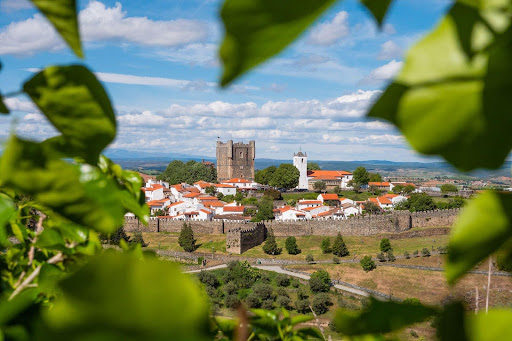
Bragança is a city in northern Portugal, located in the region of Terras de Trás-os-Montes, which includes eight other municipalities. With an area of 5544 km², it is the largest sub-region in northern Portugal and represents about 6% of mainland Portugal’s territory. The municipality of Bragança covers an area of 1173.6 km² and borders Spain to the north and east, and other municipalities to the south and west. In 2012, Bragança was restructured into 39 parishes, with 50% of its territory located within the Montesinho Natural Park.
Bragança’s development strategy includes supporting clusters and strategic sectors, enhancing the territory, and creating an Ecocity culture focused on citizenship, education, and training. The city prioritizes sustainable mobility, energy efficiency, and the introduction of new technologies in historical centres and commerce. Through an innovative project, Bragança took the first step towards a globally consistent sustainability vision by participating with a pioneering group of municipalities (six) in the first municipal assessment of Ecological Footprint and Biocapacity (led by ZERO, Global Footprint Network, and the University of Aveiro). The preliminary results show that Bragança’s Biocapacity is approximately 110% higher than the national average, largely due to the environmental sustainability policies that have been implemented.
KEY PROJECTS & FOCUS AREAS
Bragança has stood out in implementing sustainability and circular economy practices. The municipality has been adopting sustainable practices in various areas such as construction, mobility, and waste management: projects like «EnerUSER – Building a Network of Efficient Cross-Border Users» and «BIOURB – Cross-Border Constructive Diversity, Bioclimatic Construction and Its Adaptation to Modern Architecture and Urbanism» promote the use of sustainable materials and the promotion of bioclimatic construction practices, respecting both traditional architecture and technological innovations. More recently, the NaturFab project, promoted by CeDRI – the Research Centre for Digitalization and Intelligent Robotics, tests and develops innovative and circular solutions, using local resources.
Bragança has also implemented efficient waste management systems, with the pilot project » Door-to-Door Garbage Collection» in the historic centre, aiming to improve recycling and reduce waste, and has invested in clean technologies, replacing the municipal fleet with electric vehicles for urban services. In the agricultural sector, the municipality helps promote short food chains, such as the «Banca na Praça» initiative, which promotes the direct sale of local products, encouraging the production and consumption of «KM 0» food. Since 2011, IPB has encouraged urban horticulture, promoting the only urban vegetable garden, focusing on organic and sustainable farming.
ONGOING EFFORTS & ACTIONS
Bragança is actively working toward becoming an Ecocity, focusing on sustainability and eco-friendly practices. Key initiatives include promoting renewable energy like solar and wind, ecotourism to preserve its natural beauty, and ecoconstruction with energy-efficient building practices. The municipality is also committed to using ecoproducts and developing pollution-free public transport, such as electric buses. Since defining its Ecocity strategy in 2008, Bragança has incorporated Smart Cities and Circular Economy principles into its municipal management. The city has been recognized in both national and international rankings as a model for sustainable urban development. In a region facing demographic challenges and the need to attract investment, Bragança focuses on leveraging its endogenous resources and nature.
Bragança’s goal is to create a sustainable urban environment that combines modernity with ecological values, improving the quality of life while protecting the environment. These efforts are positioning Bragança as a leading example of sustainable development in Portugal, fostering long-term growth and sustainability through innovative initiatives.
LOCAL IMPACT
Bragança has sought to maintain a positive impact on its local community through various initiatives focused on economic, environmental, and social growth. Job creation is one of the main achievements, especially with the development of innovation hubs such as Brigantia-EcoPark, which has attracted businesses and entrepreneurs, generating new job opportunities in sectors such as technology and research.
In addition, the simplification of bureaucracy through Espaço Empresa de Bragança has encouraged the growth of small and medium-sized enterprises (SMEs), creating a favourable environment for entrepreneurship. Sustainable practices also play a significant role, with the valorisation of local resources, such as agricultural by-products, and the promotion of efficient waste management, contributing to environmental preservation and ecological innovation.
Education is also a fundamental pillar, with the Polytechnic Institute of Bragança offering courses in agriculture, technology, and business, thus training a skilled workforce. These efforts have boosted growth in the agricultural and technological sectors and broadened opportunities for the local population.

The region of Bragança faces several obstacles in promoting innovation and economic growth. Firstly, the aging population results in a decrease in the active population and, consequently, a reduced capacity for innovation and the use of new tools. With a higher proportion of elderly individuals, the region also struggles to attract and retain young talent that could contribute to entrepreneurial and technological advancements. Secondly, there is a lack of entrepreneurial culture and innovation. The region lacks a robust ecosystem that includes business incubators, mentorship, and access to funding, which hinders the growth of startups and new ideas. And finally, insufficient internet coverage and deficient digital infrastructure, including the absence of mobile networks in some rural areas, restrict the ability of businesses to enter global markets, adopt modern technologies, and leverage digital tools for growth.
Several areas with growth and development potential stand out:
Promote the increase of local product consumption: Encourage short distribution circuits, strengthening the local economy and reducing the carbon footprint.
Improve the nutritional quality of meals: Value local products in community meals, promoting healthier and safer food.
Promote awareness of seasonal product consumption: Encourage the consumption of fresh and seasonal foods, reducing pressure on natural resources.
Promote the reduction of food waste: Implement waste reduction initiatives, such as educational campaigns and food repurposing practices.
Promote a sustainable agricultural model: Encourage more efficient and sustainable agricultural practices, respecting the environment and increasing the profitability of local producers.
KEY PARTNERSHIPS
Brigantia Ecopark
Colab More
CIMO-IPB
CIM-TTM
The Bragança contributes to sustainable food systems, circular bioeconomy, and rural resilience through various initiatives. These include composting food waste and bio-waste, with the distribution of 53 collective collection points and containers for restaurants and institutions under the “Selective Collection of Bio-waste” project. The valorisation of endogenous resources is promoted through events like the “Festival do Butelo e das Casulas” and Gastronomic Weeks, boosting the local economy. The promotion of fresh and seasonal products is encouraged through initiatives like “Banca na Praça”, promoting healthy eating and sustainable agricultural practices. Livestock production is supported, with a focus on improving sanitary conditions and creating more business opportunities. Additionally, local gastronomy is valued as an economic, social, creative, scientific, and tourist driver.

Super Bock Group
“The Super Bock Group ensures the distribution of all the hops produced, thus contributing to the sustainability of this type of crop. It is this Trás-os-Montes hop that is used in the production of the beers in the Super Bock Selecção 1927 range.”

